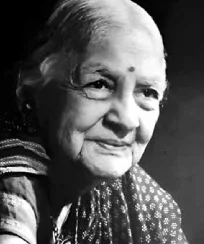
The genesis of The Crafts Council of India can be traced back to the establishment of the World Crafts Council (WCC) in 1964 in New York City. The WCC was co-founded by Kamaladevi Chattopadhyay a visionary who saw craft not merely as heritage, but as a living instrument for empowering women, revitalising rural economies and building sustainable livelihoods across India.
In the 1950s, Nehruvian economic policies favouring industrialisation and the dominance of factory-made goods posed a serious threat to local craft traditions. Kamaladevi headed the All-India Handicrafts Board, established in 1952, to protect and promote traditional handicrafts through this turbulent post-colonial period.
The Crafts Council of India was initially set up in Bombay in 1964 and moved to New Delhi in 1966. In 1977, Kamaladevi guided a further relocation to Chennai believing the South, with its rich craft traditions and growing network of State Councils, had become the natural centre of this revival.
Vijaya Rajan, who became Founder-Chairperson of CCI Chennai, recalls how Kamaladevi entrusted her with the role of first Honorary Secretary in 1964 and later Chairperson in 1976. Under the subsequent stewardship of Ashoke Chatterjee and Kasturi Gupta Menon, the organisation grew into the credible, volunteer-driven body it is today, spanning ten affiliated State Councils and touching thousands of artisan families across 28 states.
The essence of CCI's ethos, as envisioned by Kamaladevi, remains volunteerism. Members give of their time freely, travel at their own expense, and fund operations through spectacular textile shows and craft exhibitions. The three words that define this work — support, promote, sustain — have guided the organisation through sixty years of service to India's craft world.